Why You Break Out After Workouts - and the Timing Fix That Clears It
Quick Answer: Sweat itself does not clog pores - but sweat left to dry mixes with oil, sunscreen, makeup, and bacteria into a film that does, especially under friction from hats, straps, and tight fabric. The fix is mostly timing: cleanse or at least rinse within about 20 to 30 minutes of finishing, get out of damp clothes immediately, and keep hands and dirty towels off your face mid-workout. If the bumps are itchy, uniform, and live on your chest and back, that is likely a different condition that acne products will not fix.
You start training consistently and your skin - the thing exercise was supposed to help - gets worse. It feels like a tax on doing the right thing. It is actually a logistics problem, and logistics problems have schedules, not villains.
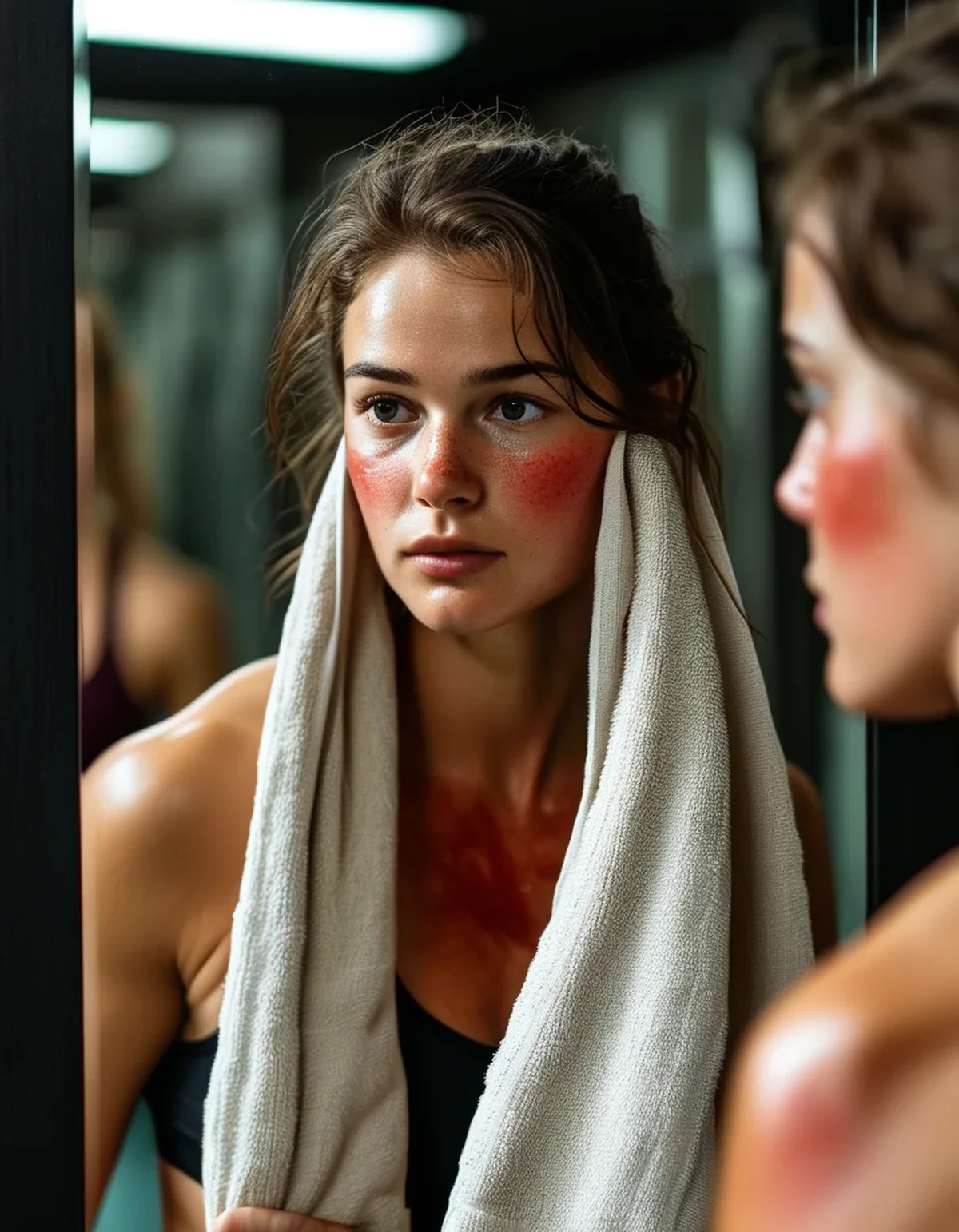
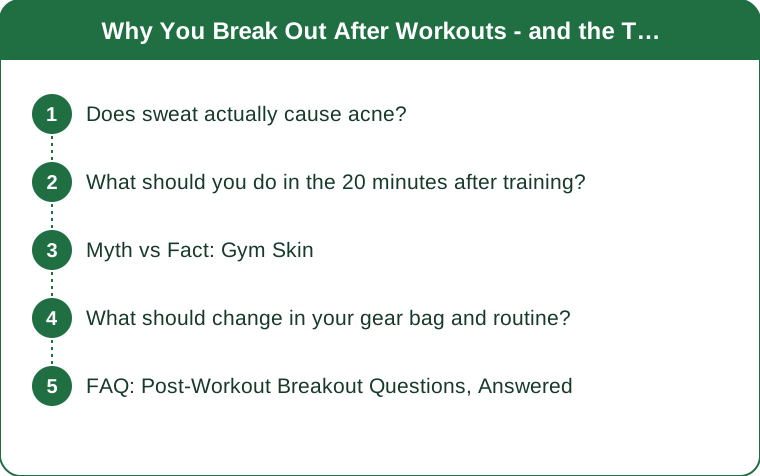
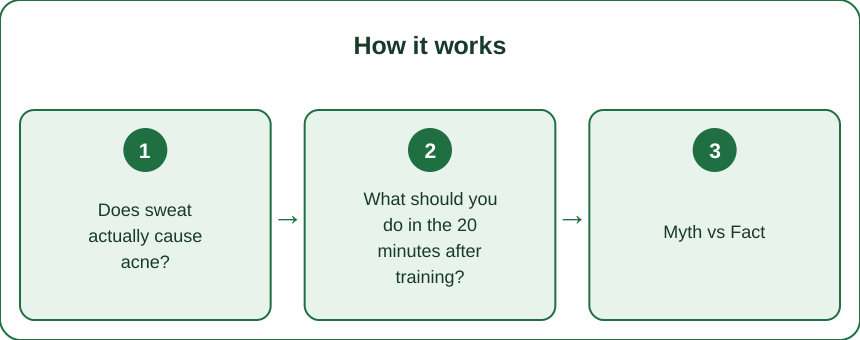
Does sweat actually cause acne?
Not directly - and getting the mechanism right is what makes the fix obvious.
Sweat is mostly water and salt. It does not block pores on its own, and the sweating process may even help flush surface debris. If sweat were the cause, every runner would have terrible skin, and they do not.
The problem is the cocktail. During a workout, sweat mixes with sebum, leftover makeup, morning sunscreen, hair product migrating down from your hairline, and the normal bacteria living on skin. While you sweat, that mixture stays mobile. When you stop and it dries in place - during the drive home, the coffee after class, the errand run - it concentrates into exactly the pore-clogging film acne needs. The breakout you see Thursday was mixed on Tuesday and left to set.
Friction is the accelerant. Dermatologists have a name for breakouts caused by heat, pressure, and rubbing: acne mechanica. It maps precisely onto gear - the hatband line on the forehead, the chin strap zone, the sports bra band across the back, the waistband. If your breakouts trace your equipment, you are looking at friction plus occlusion, and fabric choices matter as much as face wash.
Heat and humidity finish the job. Late-summer training means more sweat volume, slower evaporation, and longer times spent damp - which is why this problem always peaks in August and improves in October without anyone changing their skincare.
What should you do in the 20 minutes after training?
Timing beats products here. The window between finishing and cleansing is the single most controllable variable.
Rinse or cleanse within 20 to 30 minutes. A full shower with a gentle cleanser is ideal - and the face deserves actual cleanser, not just water pressure. Keep it gentle: this is a rinse-the-film job, not a scrub-yourself-raw job, because a stripped, irritated barrier breaks out more easily, not less.
No shower available? Triage. A packet of fragrance-free cleansing wipes or a small bottle of micellar water in the gym bag handles the face, neck, and chest in ninety seconds in the locker room. It is not glamorous and it works - the goal is breaking up the film before it dries, not achieving surgical cleanliness.
Change everything damp, immediately. The sports bra is the priority item: a damp band held against skin by elastic for an extra hour is the textbook setup for chest and back breakouts. Pack a dry tee and change before the drive home. Damp leggings on the commute do the same thing to body skin that a damp hat does to your forehead.
During the workout, manage the touch points. One side of your towel touches equipment, the other side touches your face - never confuse them. Wipe sweat with a pat rather than a drag. Keep hair off the face with a clean band, not yesterday’s. Phone screens are equipment too.
And if you wore makeup to the gym, that is the first variable to change: a full face under sweat is extra raw material for the film. Bare skin or a light non-comedogenic mineral layer trains better.
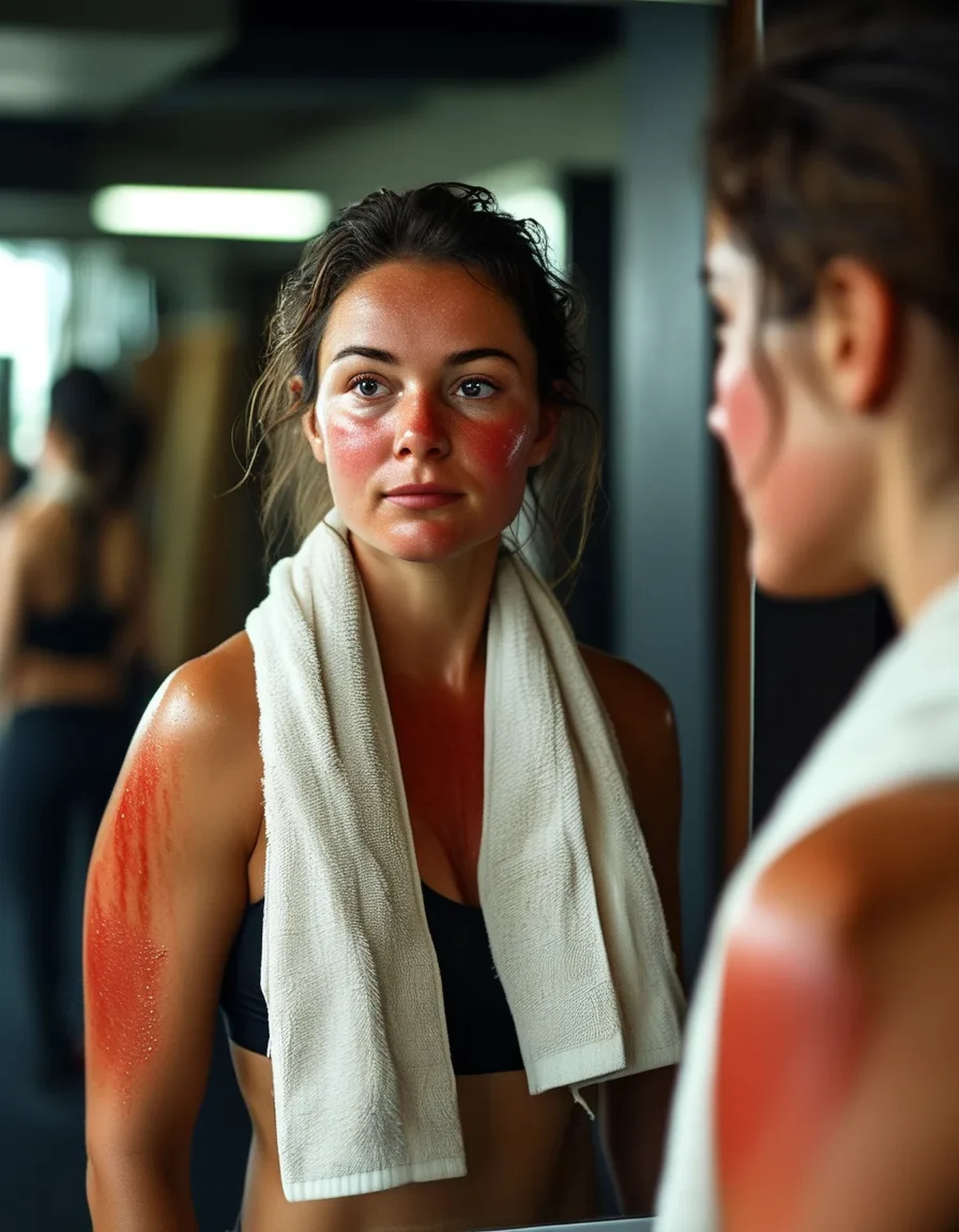
Myth vs Fact: Gym Skin
Myth: Sweating detoxes your skin and clears pores. Fact: Sweat glands and pores are different plumbing, and sweat does not carry blockages out. Any post-sauna glow is temporary circulation, not detox. Sweat is neutral; drying sweat is the issue.
Myth: Breaking out means you should scrub harder after workouts. Fact: Aggressive scrubbing damages the barrier and can spread inflammation - and on friction-driven acne mechanica it is literally adding more friction. Gentle cleansing, twice a day plus post-workout, is the ceiling.
Myth: If it is on my chest and back, it is the same acne as my face. Fact: Sometimes - but itchy, uniform small bumps across the chest, back, and shoulders that flare with sweat are classic for malassezia folliculitis, a yeast-driven condition that mimics acne and shrugs off standard acne treatment. Uniform and itchy points to the imposter; varied and tender points to acne. A stubborn case is worth a dermatology look, because the treatments differ completely. This is general information, not medical advice.
Myth: Working out with acne means you should stop working out. Fact: Exercise improves circulation, stress hormones, and sleep - all skin-relevant. The fix is workflow, not abstinence.
Myth: A breakout after starting the gym means the gym is dirty. Fact: Shared equipment plays a small role - hence the towel rules - but your own timing, fabrics, and friction points explain far more of it.
What should change in your gear bag and routine?
A handful of upgrades that target the actual mechanism.
Fabric first. Moisture-wicking synthetics move sweat off the skin; cotton soaks and holds it against you like a compress. For anyone with body breakouts, wicking tops and a wicking sports bra are skin care. Wash workout clothes - especially the sports bra - after every wear; re-worn gym clothes are pre-loaded with the exact film you are trying to avoid, and leggings that marinate in a gym bag until laundry day carry it forward.
Rotate and wash the gear nobody washes. Hats, headbands, and the pillowcase-adjacent items of gym life hold sweat residue against the same strip of skin daily. Two headbands in rotation, washed weekly, quietly fix a forehead.
Add one targeted active, gently. A salicylic acid cleanser a few times a week - or a benzoyl peroxide wash for the chest and back, used in the post-gym shower and rinsed thoroughly - addresses the pore-clogging film chemically. Introduce one thing at a time and let the barrier stay comfortable; more actives than that usually backfires during heavy training months.
Sunscreen still belongs in the picture. Outdoor late-summer training means SPF - choose a light, non-comedogenic sport formula and put it on skin that is clean, not layered over yesterday’s film. Reapply for long sessions; rinse it off promptly after.
Know when it is beyond logistics. Deep painful cysts, breakouts that scar, a pattern that survives six weeks of good timing and fabric hygiene, or the itchy uniform chest-and-back rash all justify a dermatologist - prescription options exist for each, and guessing for months costs more than the visit.
FAQ: Post-Workout Breakout Questions, Answered
How soon after a workout should I wash my face?
Within about 20 to 30 minutes - before the sweat film dries in place. A gentle cleanser is ideal; micellar water or a fragrance-free wipe is a solid locker-room substitute.
Why do I break out on my back and chest since starting the gym?
Usually damp fabric held against skin by elastic, plus friction - the sports bra band zone is the classic map. Change out of damp gear immediately, choose wicking fabrics, and wash them every wear. Itchy uniform bumps that ignore acne products may be fungal folliculitis - a dermatologist can tell quickly.
Should I wash my face before working out too?
If you are wearing makeup or heavy sunscreen, yes - a quick cleanse beforehand removes the raw material the sweat film is made from. Bare-faced morning trainers can skip straight to the post-workout wash.
Does sweating help acne at all?
Exercise helps skin indirectly - circulation, stress, sleep - but sweat itself neither treats nor causes acne. The handling of sweat afterward is where skin outcomes are decided.
TL;DR:
- Sweat does not clog pores; sweat drying into a film of oil, sunscreen, and bacteria does.
- The 20-minute rule beats any product: rinse or cleanse fast, and change out of damp gear immediately - sports bra first.
- Friction maps the breakouts: hats, straps, waistbands. Wicking fabrics washed every wear are skincare.
- Itchy uniform chest-and-back bumps are likely the fungal imposter - different problem, different treatment.
Your skin was never objecting to exercise. It was objecting to the commute home in a damp sports bra - and that is a fixable schedule.
See It in Motion
Seen here: High Waist Embossed Yoga Leggings with Side Pockets — shop it on bubblelime.com
Keep Reading
This article is for general informational purposes only and is not medical advice. Always consult a qualified health professional for guidance specific to you.