How Do I Stop Breakouts Under Hats, Helmets, and Headbands?
Quick Answer: Breakouts in a line along the forehead or hairline are usually caused by friction, pressure, heat, and trapped sweat rather than by anything you’re eating or missing in your routine - a pattern often described as acne mechanica. The fix is mechanical: clean the item itself regularly, add a moisture-wicking barrier between it and your skin, remove it and clean the skin promptly after use, and loosen anything that’s leaving a mark. Products help at the margins; the equipment is doing most of the work.
If the spots follow a line rather than a scatter, that line is a map of where something sat against your skin.

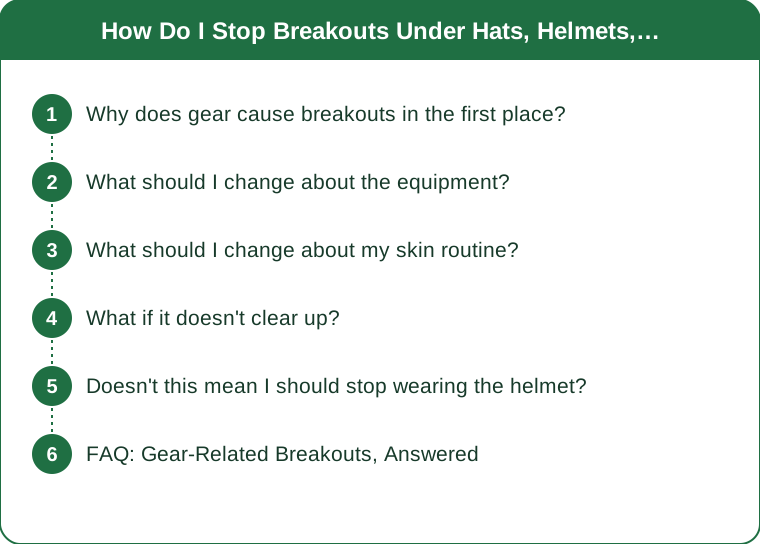
Why does gear cause breakouts in the first place?
Friction and pressure irritate follicles directly. Repeated rubbing or sustained pressure on skin is a recognised trigger for a mechanically driven form of acne, and it produces breakouts in exactly the pattern the equipment contacts.
Heat and occlusion trap sweat against the skin. A helmet or a hat creates a warm, humid microclimate. Trapped sweat, oil, and dead skin cells sitting under pressure is a considerably more provocative environment than the same skin left open.
The item itself accumulates residue. Headbands, hat linings, and helmet padding hold sweat, oil, product, and bacteria, and most people wash the headband far less often than the face underneath it.
Hair products transfer along the hairline. Styling products, dry shampoo, and conditioners concentrate exactly where a headband or hat sits, and pressure presses them into the skin.
Autumn makes it worse, not better. Hats come back, hoods go up, and helmet liners get thicker - all while people assume the summer sweat problem is over.
And the pattern is diagnostic. A scatter across the whole face suggests something systemic. A defined band along the forehead or the hairline is mechanical almost every time.
What should I change about the equipment?
Wash fabric items far more often than you think. Headbands, caps, and beanies should be washed like underwear rather than like outerwear - after every sweaty use, or every few wears otherwise. This alone resolves a lot of cases.
Clean and dry helmet padding regularly. Most helmet liners are removable and washable. If yours isn’t, wipe the contact areas after each use and let the helmet dry fully rather than storing it in a bag.
Put a clean barrier between skin and gear. A thin moisture-wicking liner, a clean cotton bandana, or a disposable liner in a shared helmet. Something you can change every session.
Loosen anything that leaves a mark. A visible indentation after removal means the pressure is high enough to be part of the problem. Adjust the fit rather than tolerating it.
Rotate two headbands rather than using one. One in the wash, one in use. It’s the simplest way to guarantee you’re never reaching for yesterday’s.
And check what your hair products are doing. Applying styling product near the hairline before putting on a hat or helmet is a reliable way to press it into the skin. Keep product away from the contact zone or apply after.
What should I change about my skin routine?
Clean the skin promptly after removing the gear. Not necessarily a full cleanse - a gentle wash or a wipe with a suitable cleanser within a reasonable window after sweating is the practical version, and it matters more than what you use.
Don’t over-scrub the area. Skin that’s already mechanically irritated responds badly to physical exfoliation. Aggressive scrubbing makes friction-driven breakouts worse, not better.
Consider a salicylic acid cleanser or leave-on for the affected zone. It works within the follicle and is a common first choice for congestion along a contact line. Introduce it gradually rather than daily from the start.
Keep the barrier intact with a light moisturiser. Drying the area out is the instinct and it backfires - a compromised barrier is more reactive to friction, not less.
Treat the whole contact zone, not just the visible spots. Spot-treating individual lesions doesn’t address the follicles that are being irritated but haven’t erupted yet.
And give it time. Congestion that’s already formed takes weeks to clear even after the cause is removed. Judging a change after five days is how people conclude nothing works.

What if it doesn’t clear up?
Check whether the pattern still matches the gear. If the breakouts have spread beyond the contact zone, the mechanical explanation may not be the whole story anymore.
Consider what else changed at the same time. New shampoo, a new hat fabric, a new detergent, a schedule change that means longer wear. The trigger is often something introduced rather than something ongoing.
Look at how long the gear is on. Occasional wear is very different from a helmet worn for a two-hour commute daily. Duration of contact is one of the biggest variables and it’s often the one that’s changed.
Rule out an irritant or allergic reaction. Redness, itching, or a rash rather than distinct spots points somewhere different, and that distinction matters for treatment.
Don’t stack multiple new actives at once. Introducing three products simultaneously means you can’t tell what’s helping and you’re more likely to irritate skin that’s already under mechanical stress.
And see a clinician for persistent or painful cases. This is general information, not medical advice. Deep, painful, or scarring lesions, or breakouts that don’t respond after several weeks of consistent changes, are worth taking to a GP or dermatologist - effective prescription options exist and delaying tends to cost more in marks than in time.
Doesn’t this mean I should stop wearing the helmet?
No - and that’s an important one to say plainly. A helmet is protective equipment. The correct response to helmet-related breakouts is better hygiene and fit, never skipping the helmet.
The same goes for anything with a safety function. Sports headgear, protective masks in certain jobs. These are managed rather than removed.
Optional items are a different conversation. A tight decorative headband worn daily is worth loosening, alternating, or swapping for a looser style, because there’s no cost to doing so.
Fit changes are usually enough. A helmet that’s correctly fitted rather than over-tightened, with a clean liner and a wicking barrier, is a substantially different proposition for skin than one that isn’t.
Duration is the adjustable variable. Removing a hat indoors, taking a helmet off during a stop, and letting skin breathe between sessions all reduce total contact time without giving anything up.
And washing the item is the highest-value change available. It’s free, it takes minutes, and in a lot of cases it’s the whole fix.
FAQ: Gear-Related Breakouts, Answered
Why do I break out along my hairline after wearing a hat?
Friction, pressure, heat, and trapped sweat irritate the follicles in the contact area - a mechanically driven pattern rather than a routine problem. Hair product transferring at the hairline usually contributes.
How often should I wash a headband or cap?
After every sweaty use, and every few wears otherwise. Treat them like underwear rather than outerwear, and rotate two so there’s always a clean one.
Should I stop wearing my helmet if it’s causing breakouts?
No. Manage it instead: clean or replace the liner, add a clean wicking barrier, check the fit isn’t over-tightened, and clean your skin promptly afterwards. Protective equipment isn’t the thing to give up.
How long until it clears after I fix the cause?
Existing congestion takes weeks to clear even once the trigger is removed, so give consistent changes several weeks before judging. Persistent, painful, or scarring breakouts deserve a clinician’s input rather than more time.
TL;DR:
- Breakouts in a defined line along the forehead or hairline are usually mechanical - friction, pressure, heat, and trapped sweat.
- Wash headbands and caps like underwear, clean helmet liners regularly, and rotate two so there’s always a clean one.
- Add a clean wicking barrier between gear and skin, and loosen anything that leaves a visible mark.
- Clean skin promptly after use, avoid scrubbing, and keep the barrier intact with a light moisturiser.
- Never skip protective equipment - manage it. And give consistent changes several weeks before judging.
If the spots follow a line, the line is the diagnosis. Wash the thing that made it.
Keep Reading
This article is for general informational purposes only and is not medical advice. Always consult a qualified health professional for guidance specific to you.