Why Sunscreen Sometimes Triggers Breakouts and How to Actually Fix It Without Skipping SPF
Sunscreen breaking someone out often leads straight to skipping it altogether, which trades one real skin problem for a much bigger one. The breakout-triggering effect usually comes down to specific formulation choices, not sunscreen as a category. Here’s what actually causes the reaction, and how to find a formula that protects skin without provoking it.

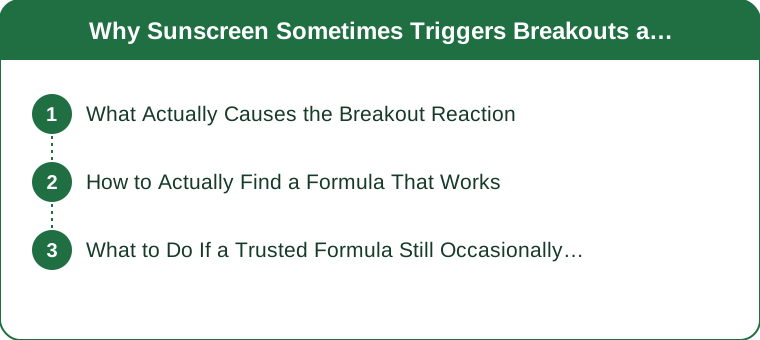
What Actually Causes the Breakout Reaction
The specific culprits: the the-heavy-comedogenic-oils-in-some-chemical-sunscreen-formulas-clog-pores-directly (the certain chemical filters being formulated with heavier oil-based carriers specifically to improve spreadability, and those oils ranking as comedogenic for breakout-prone skin specifically — the the-carrier-oil-not-the-uv-filter-itself-is-often-the-actual-trigger), the the-mineral-sunscreens-with-heavy-white-cast-correcting-additives-can-also-clog-pores (the some mineral formulas adding extra tinting or blending agents to reduce the white cast, and those additives carrying their own comedogenic risk separate from the zinc or titanium base — the mineral-sunscreens-arent-automatically-safe-either-the-added-blending-agents-matter-too), and the reframe (the breakout risk tracking with specific formulation ingredients rather than with sunscreen as a category or with chemical-versus-mineral filter type alone).

How to Actually Find a Formula That Works
The practical filter: the the-look-specifically-for-non-comedogenic-labeling-and-a-short-oil-free-ingredient-list (the choosing a formula explicitly labeled non-comedogenic with a shorter ingredient list, reducing the odds of an unlisted heavy oil or blending agent causing a reaction — the a-shorter-oil-free-ingredient-list-reduces-the-odds-of-a-hidden-comedogenic-additive), the the-gel-and-fluid-formulas-generally-carry-a-lower-breakout-risk-than-cream-formulas (the lighter gel or fluid textures typically using less heavy oil-based carrier than a rich cream formula, a texture-based clue that correlates reasonably well with lower breakout risk — the texture-is-a-useful-quick-predictor-even-before-reading-the-full-ingredient-list), and the frame (the fix being a more careful formula choice — non-comedogenic labeling, a shorter list, a lighter texture — rather than skipping sun protection altogether).
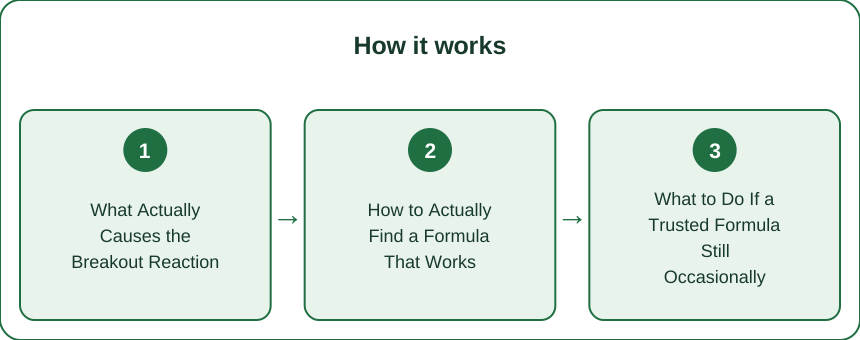
What to Do If a Trusted Formula Still Occasionally Breaks You Out
The remaining variable: the the-reapplication-throughout-the-day-adds-cumulative-product-buildup-that-a-single-morning-application-doesnt (the multiple reapplications over a day layering additional product on top of sweat, oil and makeup already on the skin, a cumulative buildup effect distinct from the formula itself — the reapplication-buildup-is-a-separate-cause-from-the-base-formulas-comedogenicity), and the frame (the fix being a thorough double cleanse at the end of the day specifically to remove that buildup, rather than concluding a previously fine formula has suddenly become the problem).
Sunscreen-triggered breakouts usually trace back to specific formulation choices — heavier comedogenic carrier oils in some chemical formulas, or added white-cast-correcting agents in some mineral ones — rather than sunscreen as a category being inherently pore-clogging. Choosing a non-comedogenic, oil-free formula with a shorter ingredient list, and generally favoring lighter gel or fluid textures over rich creams, meaningfully lowers that risk. The fix is a more careful formula choice, not skipping daily SPF, since the breakout risk from an unprotected formula is far smaller than the long-term skin damage from skipping sun protection altogether.
Keep Reading
This article is for general informational purposes only and is not medical advice. Always consult a qualified health professional for guidance specific to you.