The Period Breakout Pattern Almost Nobody Times Their Skincare Around
Quick Answer: Hormonal breakouts typically emerge 5-7 days before a period starts, driven by a progesterone rise and testosterone-to-estrogen ratio shift that increases oil production — starting a lighter, oil-controlling skincare adjustment during this specific pre-period window, rather than reacting once breakouts already appear, meaningfully reduces their severity.
The breakout shows up around the same phase every single cycle, yet most people only respond once it’s already visible rather than adjusting skincare proactively during the predictable window beforehand.

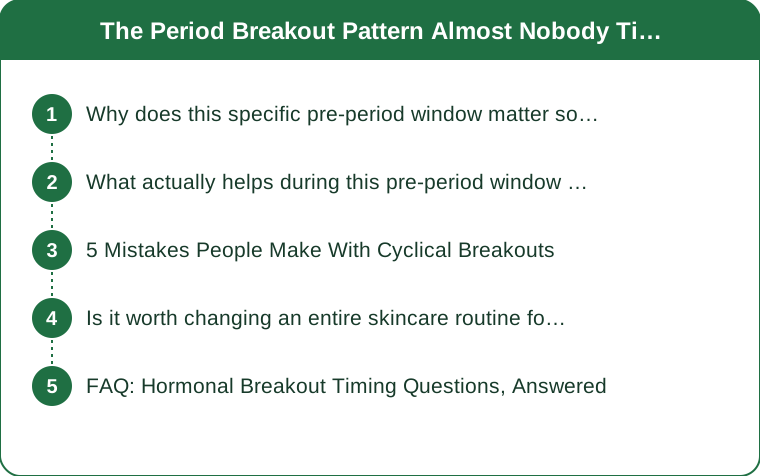
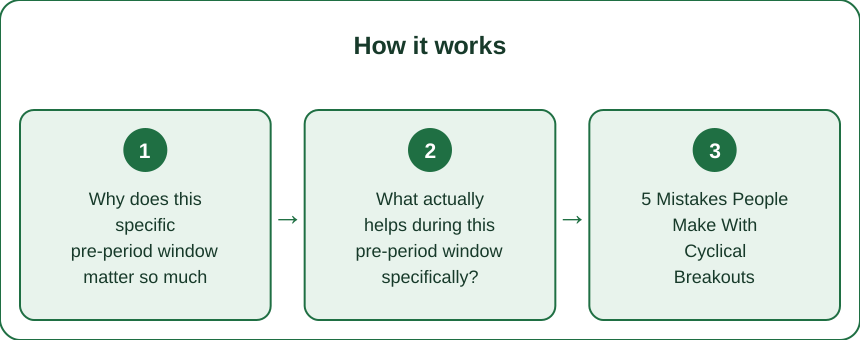
Why does this specific pre-period window matter so much for skincare timing?
In the luteal phase (roughly days 21-28 of a typical cycle), progesterone rises and the testosterone-to-estrogen ratio shifts in a way that increases sebum (oil) production — this hormonal shift is what drives the breakout, and it begins before the breakout itself becomes visible.
Adjusting skincare (adding a gentle oil-controlling ingredient, avoiding heavy new products) during this specific window, rather than after breakouts appear, works with the hormonal timeline instead of reacting after the skin has already changed.
What actually helps during this pre-period window specifically?
A gentle increase in oil-controlling ingredients (like salicylic acid at a lower frequency) and avoiding introducing new heavy or comedogenic products during this window tends to reduce breakout severity, since the skin’s oil production is already elevated and doesn’t need additional heavy product load on top of it.
Many dermatologists suggest tracking your own cycle-breakout pattern for 2-3 months to identify your personal timing window precisely, since it varies somewhat by individual rather than following one universal schedule.

5 Mistakes People Make With Cyclical Breakouts
Mistake 1: Only reacting once the breakout is already visible, missing the window where proactive adjustment is more effective.
Mistake 2: Introducing new, heavy skincare products right during the high-oil-production window, compounding rather than managing the breakout.
Mistake 3: Over-treating with harsh actives during this sensitive window, which can cause irritation on top of hormonal breakouts.
Mistake 4: Not tracking your own specific cycle-breakout timing, missing the personalized pattern that would let you act earlier.
Mistake 5: Assuming all breakouts during this window are purely hormonal, when diet or product buildup can also compound the pattern.
Is it worth changing an entire skincare routine for roughly one week a month?
A small, temporary adjustment — not a full routine overhaul — is generally more effective and sustainable, such as adding one oil-controlling step or reducing one heavy moisturizer temporarily, rather than switching everything for a week and switching back.
This lighter-touch, cycle-aware adjustment tends to be more consistent long-term than a dramatic routine change that’s easy to forget to implement or revert each month.
FAQ: Hormonal Breakout Timing Questions, Answered
How consistent is the pre-period breakout timing from cycle to cycle?
For many people it’s fairly consistent (within a few days) cycle to cycle, though stress, sleep, and other factors can shift it somewhat.
Does birth control change this hormonal breakout pattern?
Yes, often significantly — many hormonal birth control methods reduce or eliminate this cyclical pattern by stabilizing hormone fluctuation, though effects vary by method and individual.
Is it worth seeing a dermatologist specifically for cyclical hormonal acne?
If the pattern is severe or significantly affects confidence, yes — a dermatologist can offer more targeted options (topical or prescription) beyond over-the-counter timing adjustments.
TL;DR:
- Hormonal breakouts typically emerge 5-7 days before a period due to a progesterone-driven oil increase
- Adjusting skincare proactively during this window works better than reacting after breakouts appear
- Small, temporary adjustments beat a full routine overhaul each cycle
- Tracking your own cycle-breakout pattern for a few months reveals your personal timing window
The pattern repeats predictably every month — skincare timed around it, not just reacting to it, is what actually changes the outcome. This is general information, not medical advice.
Keep Reading
This article is for general informational purposes only and is not medical advice. Always consult a qualified health professional for guidance specific to you.