Does Drinking More Water Actually Clear Up Acne? Here's What the Evidence Says
Quick Answer: Water supports overall skin function but won’t directly clear active acne — breakouts are driven by oil production, clogged pores, and hormones, none of which extra water intake meaningfully changes. Proper hydration helps skin barrier health, which indirectly supports healing.
You’ve heard “just drink more water” as the fix-all for years, and it’s tempting to believe because it’s cheap and easy. The honest answer is more nuanced than either the hype or the dismissal.

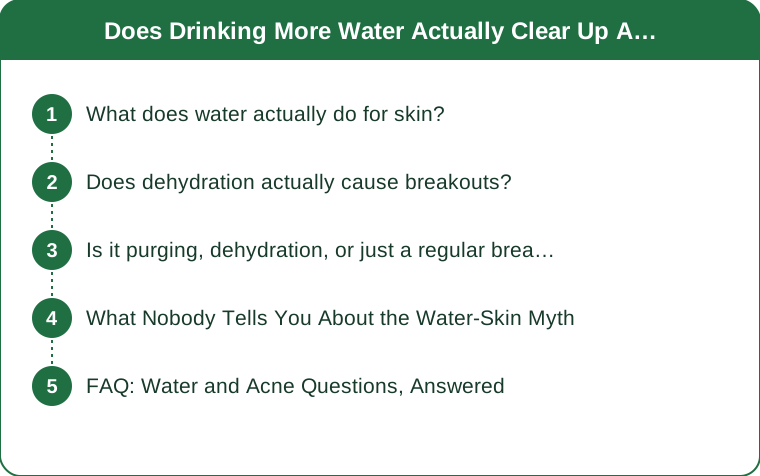
What does water actually do for skin?
Adequate hydration supports the skin barrier’s ability to retain moisture and function normally, which matters for overall skin resilience and how well products absorb. A well-hydrated barrier heals faster and tolerates active ingredients (retinoids, acids) better.
But hydration status and acne formation are largely separate systems — one is about water balance, the other is about sebum, bacteria, and clogged follicles.
Does dehydration actually cause breakouts?
Not directly. Some people notice their skin overproduces oil when dehydrated, as a compensatory response — but this link is inconsistent and not the primary driver of most acne. Hormones, genetics, and pore-clogging ingredients matter far more.
If you’re already drinking a normal amount of water (roughly 6-8 cups daily) and still breaking out, more water isn’t the missing piece.

Is it purging, dehydration, or just a regular breakout?
Is it purging or dehydration?
Purging looks like small, fast-cycling breakouts in areas you normally get acne, tied to starting a new active ingredient — not related to water intake at all. True dehydration shows as tightness and flaking, not pustules.
Can drinking too much water hurt your skin?
No real evidence of harm from normal increased intake, but it also won’t out-perform actual acne treatment — don’t substitute it for retinoids, salicylic acid, or a dermatologist visit.
What actually helps more than water for acne?
Consistent use of proven topicals (benzoyl peroxide, salicylic acid, adapalene), non-comedogenic products, and — for hormonal or cystic acne — a dermatologist consult beats any amount of extra hydration.
What Nobody Tells You About the Water-Skin Myth
The advice persists because it’s harmless and sounds virtuous, not because it’s strongly evidence-based. Studies on hydration and skin barrier function exist — studies proving water intake clears acne specifically, largely don’t.
This doesn’t mean skip water — it means don’t expect it to replace actual acne treatment, and don’t blame yourself for breakouts if your water intake is already reasonable.
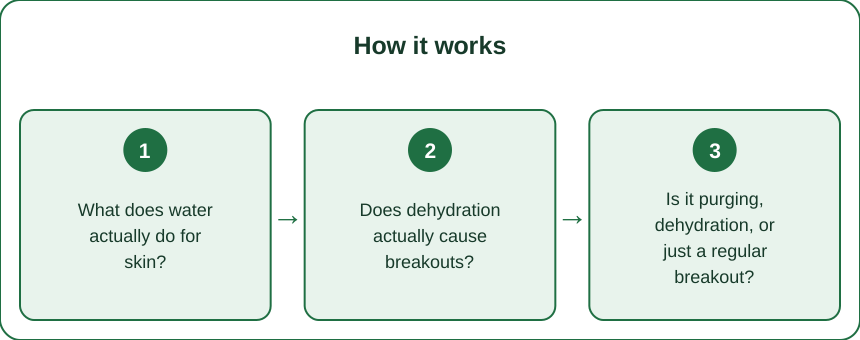
FAQ: Water and Acne Questions, Answered
How much water should I drink for skin health generally?
Roughly 6-8 cups daily covers most adults’ baseline needs — more isn’t proven to add extra skin benefit past that point.
Will cutting soda and adding water clear my skin?
Indirectly possible if soda was a significant source of added sugar, since high sugar intake has a clearer (though still modest) link to acne than hydration alone does.
Should I see a dermatologist if water and skincare aren’t working?
Yes — persistent or worsening acne despite consistent topical treatment for 8-12 weeks is a reasonable point to get a professional evaluation. This is general information, not medical advice.
TL;DR:
- Water supports the skin barrier but isn’t a direct acne treatment
- Dehydration’s link to oil production is inconsistent, not a primary acne driver
- Proven topicals (salicylic acid, benzoyl peroxide, adapalene) do far more heavy lifting
- If breakouts persist past 8-12 weeks of consistent treatment, see a dermatologist. This is general information, not medical advice.
Keep Reading
This article is for general informational purposes only and is not medical advice. Always consult a qualified health professional for guidance specific to you.