Adult Acne: Why It Happens After 25 (and What Actually Clears It)
Nobody warned you about this part: the acne that was supposed to expire with your teens showing up at 28, 35, 45 — jawline breakouts arriving with mortgage payments, chin cysts synced to your cycle, and a skincare aisle still marketing to sixteen-year-olds. Adult acne in women is common (studies put it at a quarter to half of adult women at some point), overwhelmingly hormonal in pattern, and — the good news the frustration obscures — treatable with a short list of evidence-backed tools. Here is the grown-up guide. (The dermatologist threshold gets its own section, because adult acne is exactly what dermatologists are for.)

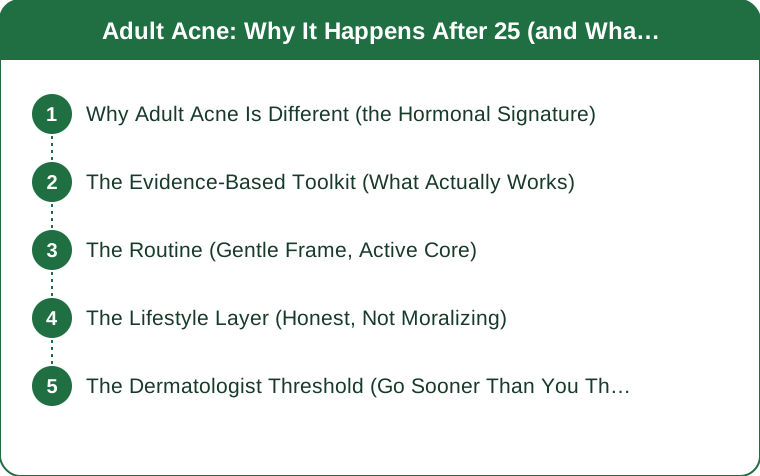
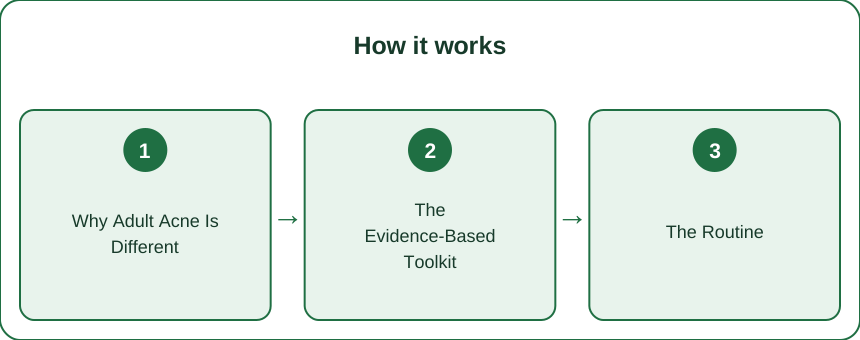
Why Adult Acne Is Different (the Hormonal Signature)
The pattern recognition: adult female acne typically maps to the lower face (jawline, chin, lower cheeks — the hormonal distribution, distinct from the teenage T-zone), times itself to cycles (the pre-period flare week is the classic signature — androgen-estrogen fluctuations driving oil production in a monthly rhythm), and presents deeper (tender under-the-skin cysts more than surface blackheads — inflammation-forward acne that picks poorly and scars readily). The contributing cast: hormonal shifts (cycles, coming off birth control, postpartum, perimenopause — every hormonal transition is an acne opportunity), PCOS (adult acne plus irregular cycles or excess hair growth deserves that specific conversation with a doctor — acne is one of its cardinal signs), stress (cortisol upregulates oil production — the deadline-week breakout is mechanistically real), and the friction-and-product layer (masks, phone screens, heavy occlusive products — the modifiable minor characters). Knowing your pattern is not academic: hormonal-signature acne responds to different tools than clogged-pore acne, and the routine below branches accordingly.
The Evidence-Based Toolkit (What Actually Works)
The active ingredients with receipts: retinoids (the foundation — adapalene is available over-the-counter and treats acne while handling the anti-aging portfolio: the two-birds ingredient for adult skin; start two nights weekly, buffer with moisturizer, expect the 8–12 week timeline and possibly a brief purge), benzoyl peroxide (the antibacterial workhorse — a 2.5–5% wash or spot leave-on; kills acne bacteria without resistance issues, bleaches towels with total commitment), salicylic acid (the pore-clearing BHA — cleansers and toners for the blackhead-and-congestion component), azelaic acid (the underrated multitasker — anti-inflammatory, anti-bacterial and fades the dark marks acne leaves behind; pregnancy-safe, sensitive-skin-friendly, and criminally under-recommended), and niacinamide (the supporting player — oil regulation and barrier support alongside the heavy hitters). The combination logic: a retinoid at night plus benzoyl peroxide or azelaic in the morning covers most bases. What the toolkit conspicuously excludes: scrubbing (inflamed skin punished into worse inflammation), alcohol-heavy astringent toners (the 1990s called; they were wrong then too), and toothpaste (folk medicine with a burn risk).
The Routine (Gentle Frame, Active Core)
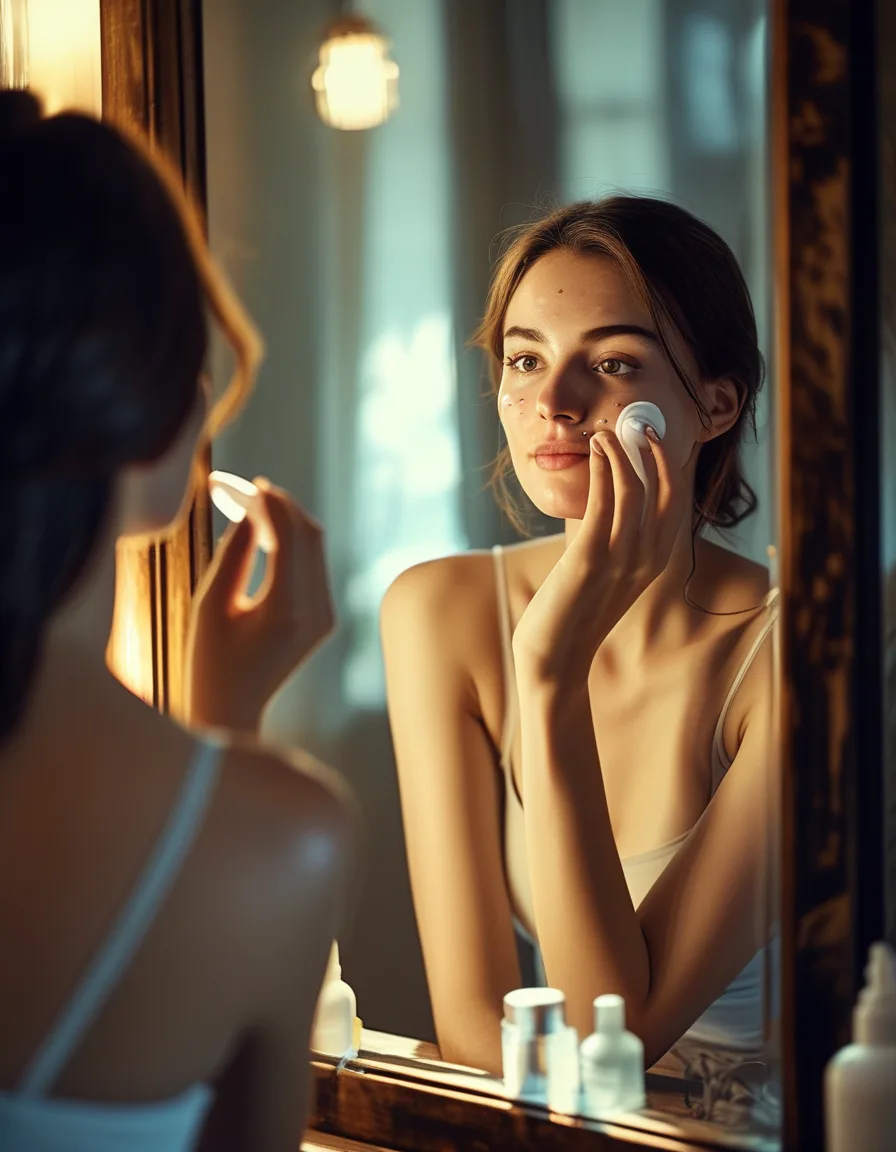
The build for acne-prone adult skin: morning — gentle low-pH cleanser, azelaic acid or niacinamide serum, light non-comedogenic moisturizer, SPF without exception (sun darkens post-acne marks into long-term souvenirs — sunscreen is mark-prevention as much as aging-prevention; gel and fluid textures solved the sunscreen-breakout conflict years ago); evening — cleanse (double-cleanse on makeup days), retinoid on its scheduled nights (alternate with azelaic on off-nights), moisturizer generously (the treated-skin barrier needs support — dry, irritated skin produces compensatory oil: the over-drying spiral is adult acne’s classic own-goal). The supporting disciplines: pillowcases weekly-ish, phone screen sanitized, hands off the face (picking converts two-week blemishes into two-year marks — the single most expensive habit in the whole topic), and patience enforced by calendar: actives get 8–12 weeks before verdicts, photographed monthly because mirror-memory lies. The routine is boring by design. Boring, consistently, is what clears skin.
The Lifestyle Layer (Honest, Not Moralizing)
The evidence-sorted lifestyle factors: high-glycemic eating patterns show real acne associations in research (the blood-sugar-spike-to-oil-production pathway — the glucose-steadying habits from the nutrition literature moonlight as skincare here; this is association-and-mechanism, not food guilt), dairy has a weaker but persistent signal (skim milk oddly leads the data — a personal two-month elimination experiment is cheap if you are curious, and unnecessary if you are not), stress management is legitimately mechanistic (cortisol-to-sebum is a real pathway — the sleep, movement and downshift practices in every wellness guide apply, with skin as one more beneficiary), and sweat is innocent but its logistics are not (the post-workout golden-hour cleanse from the gym-skincare playbook — sweat sitting under friction is the actual gym-acne culprit, not exercise). What the lifestyle layer cannot do: out-perform the actives, or justify the influencer detox narratives (acne is not toxins leaving the body; it is follicles, oil, bacteria and inflammation — all addressable, none mystical). Eat steadily, sleep enough, manage the stress you can — and let the retinoid do the primary lifting.
The Dermatologist Threshold (Go Sooner Than You Think)
The escalation criteria, stated plainly: cystic or nodular acne (the deep painful ones scar — this is prescription territory from the start, not after two years of drugstore attrition), acne with irregular cycles or hair changes (the PCOS screen — bloodwork, not guesswork), scarring or dark marks accumulating (early treatment prevents what later treatment can only partially reverse), and anything that has resisted twelve honest weeks of the toolkit above. The prescription arsenal is deep and effective: hormonal route (spironolactone — the adult-female-acne workhorse with strong dermatologist endorsement; combined birth control pills with acne indications), topical prescriptions (tretinoin tiers, prescription azelaic, topical antibiotics in combination), and isotretinoin for severe cases (the definitive option with the famous monitoring requirements — a serious, effective, well-managed tool). The framing correction the whole topic needs: seeing a dermatologist for acne is not vanity escalation — it is treating a common medical condition with the specialist built for it, ideally before the picking, scarring and $400 of abandoned drugstore serums. Adult acne is not a discipline failure. It never was. It is follicle biology with a hormone schedule — and biology, unlike shame, responds to treatment.
Adult acne, treated like the medical-and-manageable thing it is: recognize the hormonal jawline signature, run the retinoid-plus-azelaic core in a gentle routine, photograph monthly and give actives their twelve weeks, steady the blood sugar and the stress without moralizing, and escalate to the dermatologist at the cyst-scar-PCOS thresholds — sooner, not later. The teenage aisle was never going to solve this. The grown-up toolkit, given a patient quarter, very often does.
Keep Reading
This article is for general informational purposes only and is not medical advice. Always consult a qualified health professional for guidance specific to you.